What Your Attachment Style Says About You
Explore Yourself
You Attachment Styles Quiz: Discover Diffirent Types
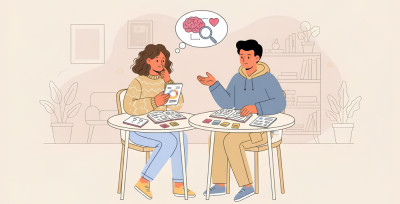 Adult Attachment Style Quiz: the Complete Guide
New Updates
Decode Your Attachment Patterns With Quiz: A Comprehensive Guide
Understanding Attachment Patterns and Why Assessments Matter
Most people sense repeating themes in love and friendship, yet struggle to name what is...

Attachment Style Test and Its Benefits: the Ultimate Guide
Understanding Attachment Science and Why Assessment Matters
Across decades of research, psychologists have shown that our earliest bonds create inter...

Different Attachment Styles in Relationships: A Practical Guide
Foundations: What Attachment Means for Adults
Lasting connection is built from the small signals partners exchange every day: a reassuring glance, a...
Take Attachment Style Quiz
Get StartedFind Out What Type of Attachment Style You Have
How you connect, soothe, and seek closeness was wired through early experiences and continually refined by later relationships. Many readers want to know why a small misunderstanding can suddenly feel enormous, or why pursuing space or reassurance becomes a default reflex. Many readers first encounter the term attachment styles when wondering why similar conflicts repeat across partners. The good news is that these patterns are adaptable, especially once you spot your triggers, name the needs beneath them, and practice new responses with patience.
Insight grows when you link bodily sensations with interpretations and actions. To get a quick feel for personal tendencies, some people explore a brief attachment style quiz and then reflect on the results with curiosity rather than judgment. What matters most is translating labels into daily habits, breathing skills to downshift arousal, repair language that de-escalates tension, and boundaries that protect both closeness and individuality. Over time, this practical approach turns abstract psychology into reliable relationship tools.
- Expect understandable patterns rather than brokenness.
- Focus on repeatable micro-skills, not one-time breakthroughs.
- Use reflective questions to link triggers to needs.
- Practice repair quickly so conflicts do not calcify.
The Science of Bonding: Origins, Models, and Evidence
Human bonding rests on the brain’s need to feel safe, seen, and soothed. In practice, an individual may show a primary attachment style that shifts under stress, context, or partner behavior. Neuroscience links these tendencies to threat-detection systems and learning loops; when comfort arrives predictably, the nervous system calibrates toward exploration, but when comfort is inconsistent or frightening, protective strategies harden.
Studies combine longitudinal observations, narrative interviews, and experiments that measure emotion, attention, and physiology. Across dyads, researchers map how relationship attachment styles collide or complement during everyday negotiations about time, intimacy, and autonomy. The result is a coherent picture: people protect what they care about using strategies that once worked, yet those same strategies can misfire in adult partnerships. Fortunately, new relational experiences, consistent responsiveness, honest boundaries, and co-regulation can remodel expectations and make closeness feel safer.
- Attachment-informed therapy improves conflict recovery and trust.
- Mindfulness reduces reactivity during perceived rejection.
- Skills training increases empathic accuracy and alignment.
- Repair attempts predict long-term stability more than conflict frequency.
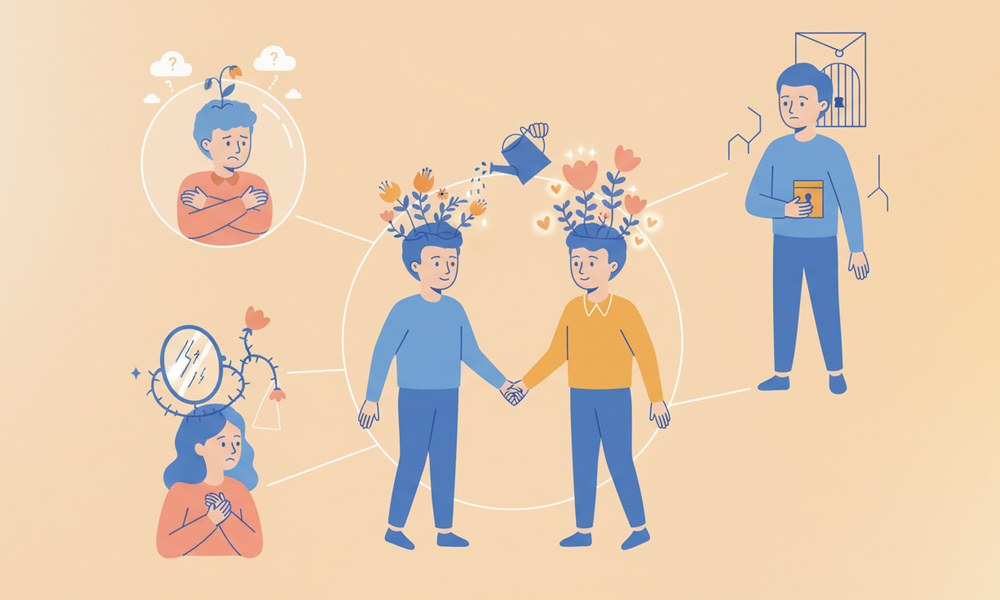
The Four Core Patterns Explained
Although every person is unique, recurring themes appear across cultures and contexts. Early caregiving calibrates expectations of safety and responsiveness, and scholars describe the resulting categories as attachment theory styles that guide proximity-seeking and coping under strain. Understanding each pattern helps you decode behavior without pathologizing yourself or your partner, turning confusion into actionable insight.
Educators often simplify the framework for clarity. For quick orientation, the most common teaching schema references 4 attachment styles named secure, anxious, avoidant, and disorganized. Each blends beliefs about self and others with typical protest behaviors and specific repair needs that can be learned and practiced.
| Pattern | Core belief | Common behaviors | Growth focus |
|---|---|---|---|
| Secure | “I am worthy and others are dependable.” | Comfort with closeness and autonomy; balanced bids for support. | Maintain consistency; model repair and curiosity. |
| Anxious (Preoccupied) | “I fear abandonment and need reassurance.” | Protest, pursuing, overthinking cues; hypersensitive to distance. | Build self-soothing; request reassurance directly and succinctly. |
| Avoidant (Dismissive) | “I must rely on myself to stay safe.” | Downplay needs; disengage under stress; high value on independence. | Name needs; tolerate closeness; practice warm responsiveness. |
| Disorganized (Fearful) | “Closeness is both desired and dangerous.” | Push–pull cycles; sudden shutdowns; confusion about signals. | Stabilize safety cues; gradual exposure to reliable connection. |
Labels are only useful if they lead to kinder interpretation and clearer behavior. With that awareness, identifying your attachment style creates a map you can revisit during friction, helping you choose connection over compulsion. As you practice repair, the nervous system learns that comfort can follow conflict, which makes future intimacy less threatening and more rewarding.
Benefits of Understanding and Working with Your Pattern
Knowing your bonding blueprint turns vague frustration into a targeted growth plan. Organizations sometimes incorporate an attachment style test into coaching or wellness programs to open nonjudgmental dialogues about feedback, trust, and collaboration. Couples who grasp the logic behind protective strategies show faster de-escalation, more generous interpretations, and greater follow-through on agreements. This clarity reduces blame and increases shared responsibility for safety and joy.
Benefits extend beyond romance into leadership, friendship, and family ties. Teams benefit when members recognize how different attachment styles shape feedback preferences and repair rituals, making conflict constructive rather than corrosive. Parents who model steadiness during stress raise kids who explore boldly and return for comfort without shame. Over months, small wins compound into lasting habits: better sleep after hard conversations, quicker reconnects, and a stronger sense that love and autonomy can coexist.
- Less reactivity and faster repair during disagreements.
- Clearer boundaries that protect both closeness and independence.
- Greater empathy through accurate interpretation of signals.
- Higher satisfaction as rituals of connection become predictable.
How to Identify Your Pattern
Start by observing how you pursue closeness, handle distance, and ask for help. In everyday situations, you can notice how adult attachment styles appear when you request reassurance, navigate jealousy, or negotiate time apart. Track signals in your body, tight chest, racing thoughts, and numbness, and pair them with the meanings you assign to a partner’s tone or timing. This creates a concrete record of triggers, stories, and responses.
Journaling soon reveals sequences: a cue, a meaning, a behavior, then an outcome. From that angle, a practical way to answer what are attachment styles is to watch whether you protest, pursue, withdraw, or shut down when connection feels uncertain. Share your notes with a trusted friend, coach, or therapist to reality-check interpretations. Over time, you will distinguish protective reflexes from genuine needs and then practice making direct requests without criticism or retreat.
- Keep a two-column log: “Trigger” and “Next best action.”
- Rate arousal 0–10 to spot thresholds for skill use.
- Rehearse repair phrases before difficult talks.
- Celebrate tiny improvements to reward your brain for change.
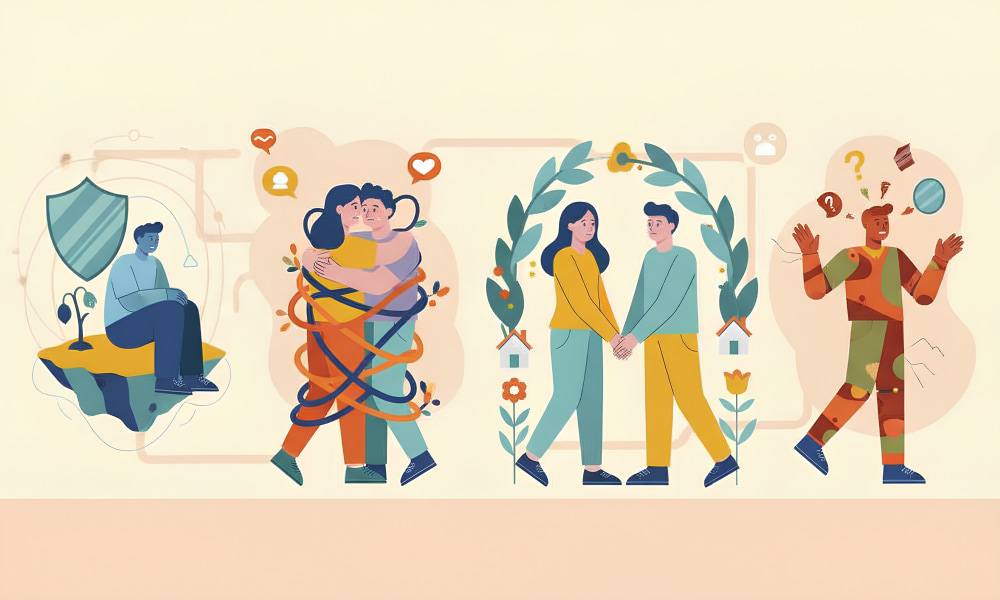
Communication and Growth Strategies
Effective change blends self-regulation, clear requests, and rapid repair. In practice, partners can translate protests into requests across attachment types by slowing down, labeling emotions, and proposing specific connection rituals. Think in scripts: “When I get quiet, I’m overwhelmed; could we pause and return in ten minutes?” A predictable ritual beats a perfect speech because repetition builds trust faster than intensity.
Guidance from a trained professional accelerates progress and reduces confusion. When working with a helper, many clients combine journaling and scenario rehearsal with an attachment style assessment to mark small wins across weeks or months. Therapy approaches like Emotionally Focused Therapy or schema-informed work provide stepwise maps for turning conflict into closeness. Practiced consistently, these methods help reassure the nervous system that connection is survivable and, eventually, deeply satisfying.
- Use “name it to tame it”: label feelings to lower arousal.
- Adopt time-bound pauses rather than open-ended retreats.
- Schedule rituals of connection: check-ins, appreciations, and touch.
- After rupture, lead with accountability before problem-solving.
Take Attachment Style Quiz
Get StartedFrequently Asked Questions
-
How stable are these patterns over a lifetime?
They are tendencies, not destinies, and they can shift with new experiences that feel safe and consistent. Changes usually happen through repeated moments of co-regulation, reliable responsiveness, and repairs that arrive quickly enough to matter.
-
Can two insecure patterns create a healthy partnership?
Yes, as long as both partners learn to recognize protest behaviors early and replace them with direct requests. Over time, shared rituals for reassurance, boundaries, and fun reduce fear and increase confidence in the bond.
-
What is a simple way to start exploring my pattern?
Begin with a brief journal after conflicts to track triggers, meanings, and responses. For orientation, many people try a carefully designed free attachment style quiz to gather a snapshot before deeper exploration with books or a professional.
-
Why do I look secure at work but reactive at home?<
Context matters, and the closeness of home can activate deeper expectations about safety and worth. Work may reward competence and distance, while intimacy evokes childhood blueprints that need gentler, slower repair.
-
What if the label I got doesn’t feel accurate?
Consider stress levels, partner fit, and recent life events before locking in an identity. If confusion remains, ask what shaped my attachment style and test new behaviors for a few weeks to see which practices actually reduce reactivity and increase ease.